StayBoard is a desktop-first hotel reservation and operations management system (CMS) built specially for hotel staff and internal teams.
The Product
Stayboard is a centralized system built to manage reservations, room availability, guest details, payments, housekeeping, and daily reports in one place. The project focuses on optimizing the complete staff happy-path journey from shift login to end-of-day report generation. The goal is to reduce errors, save time, and remove daily operational stress so hotel staff can work faster, with more clarity and confidence.
Current Competitor Products
For Stayboard, several existing hotel management systems (PMS and CMS tools) were analyzed to understand how staff currently handle daily hotel operations. The review focused on dashboard layouts, booking creation and editing, room status tracking, payment management, report generation, and role-based staff access.
This analysis revealed that many platforms are feature-heavy but workflow-poor, often slow for daily tasks, confusing during peak hours, and built without real staff behavior in mind.
Methods Used
For Stayboard, a mixed-method UX research approach was used to capture both data-driven insights and real staff behavior. Research included competitor benchmarking, online staff surveys, and moderated usability testing to ensure design decisions were based on real hotel operations. Leading PMS and CMS platforms were analyzed for navigation, booking workflows, reporting, and error handling to identify industry standards and workflow gaps. Survey insights from hotel staff directly shaped Stayboard’s features, dashboard structure, and overall system flow.
Pre-Design Discovery Phase
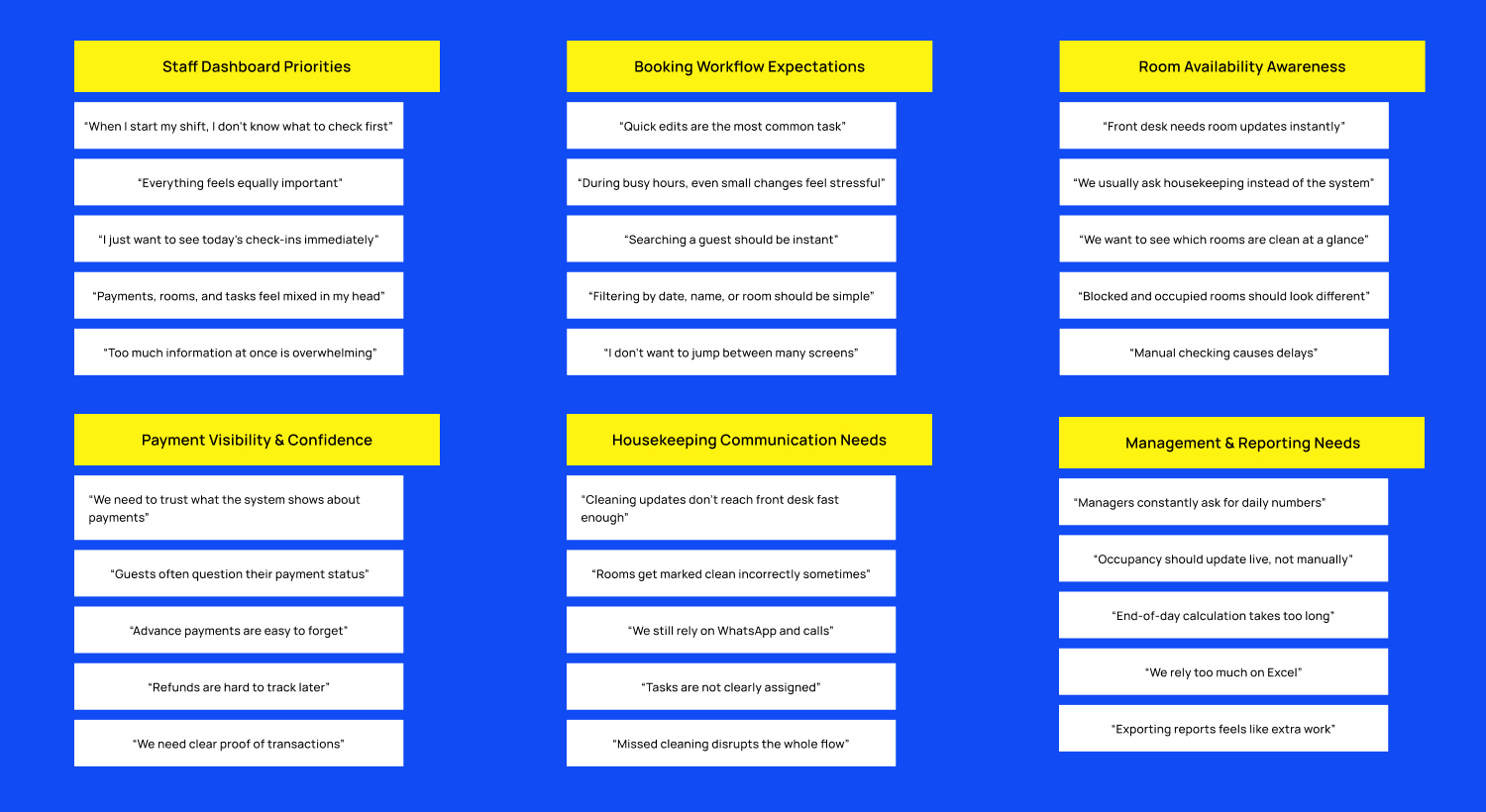
Early staff interviews conducted before UI design to understand real operational pain points and define core system needs for StayBoard.
From Research to First Usable Interface
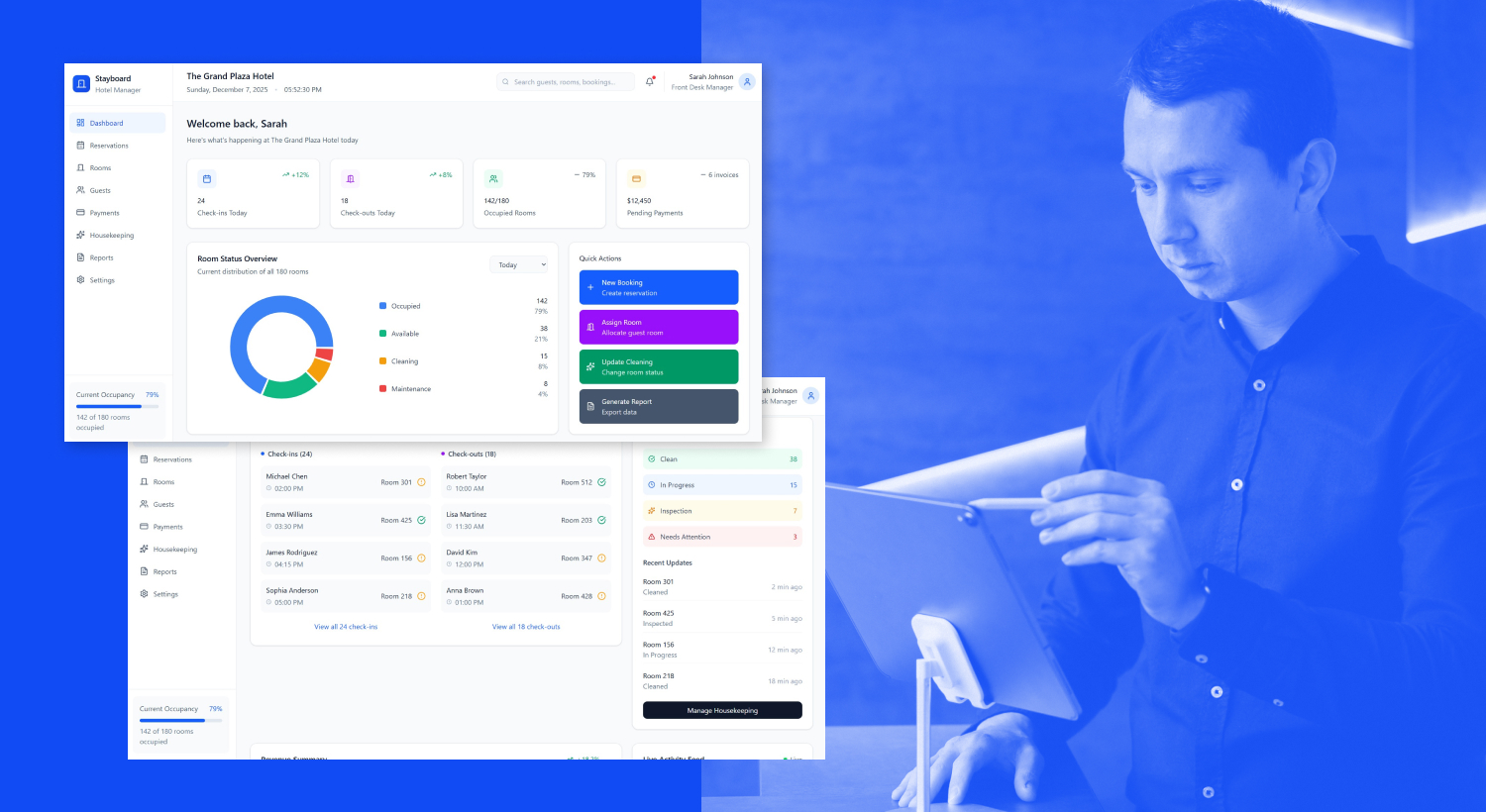
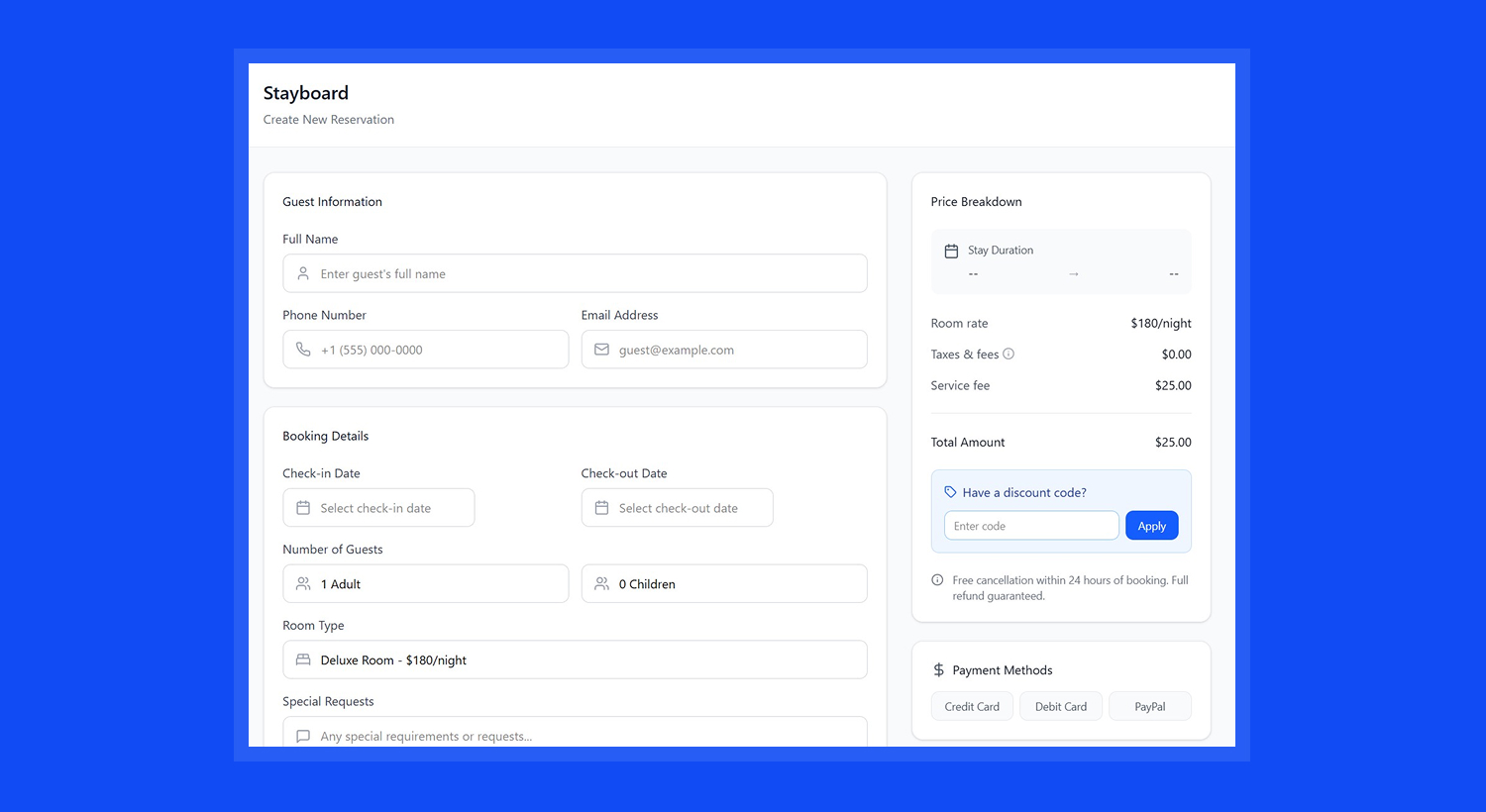
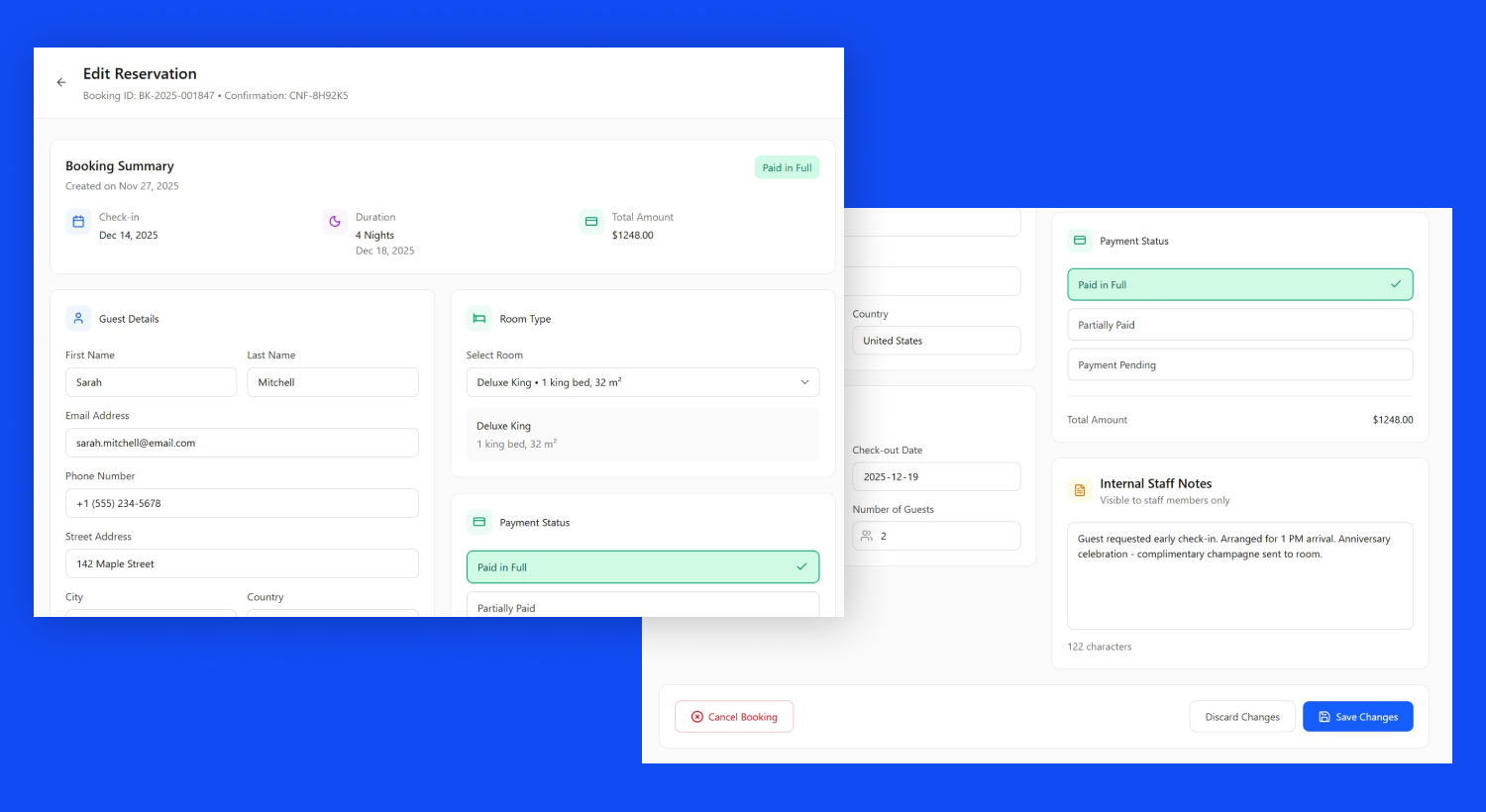
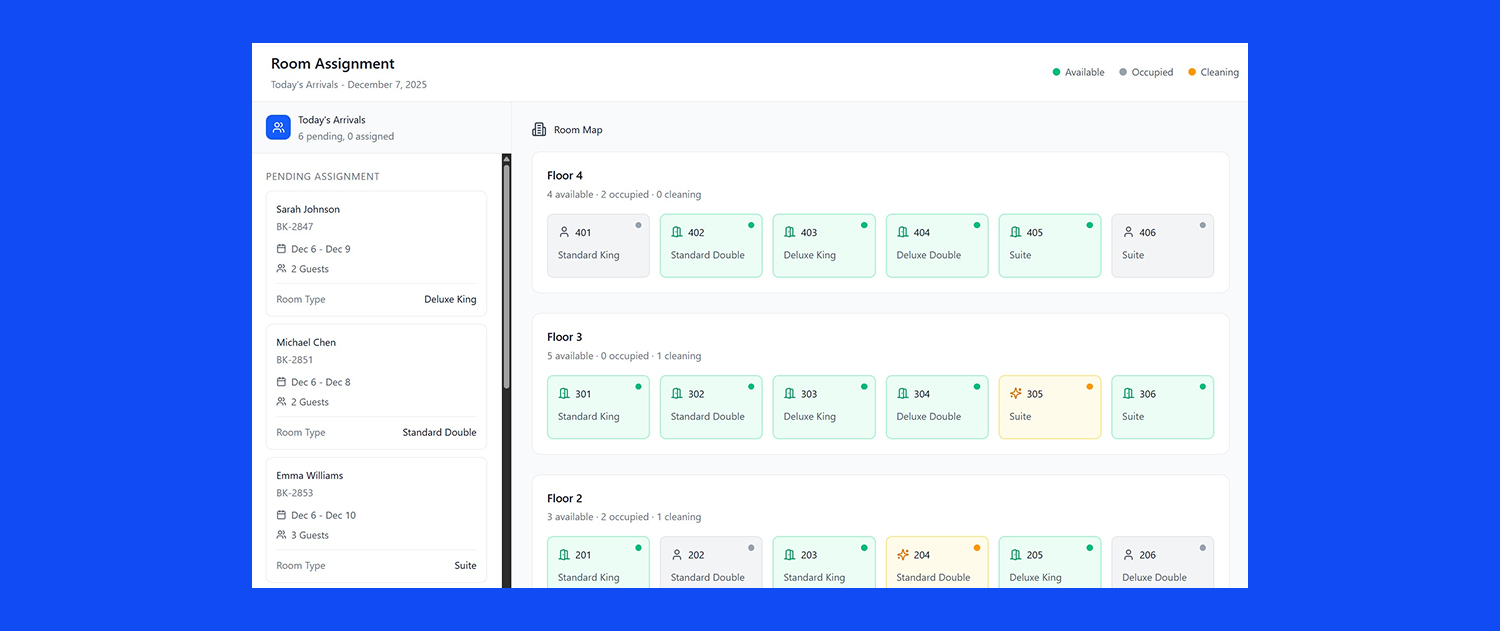
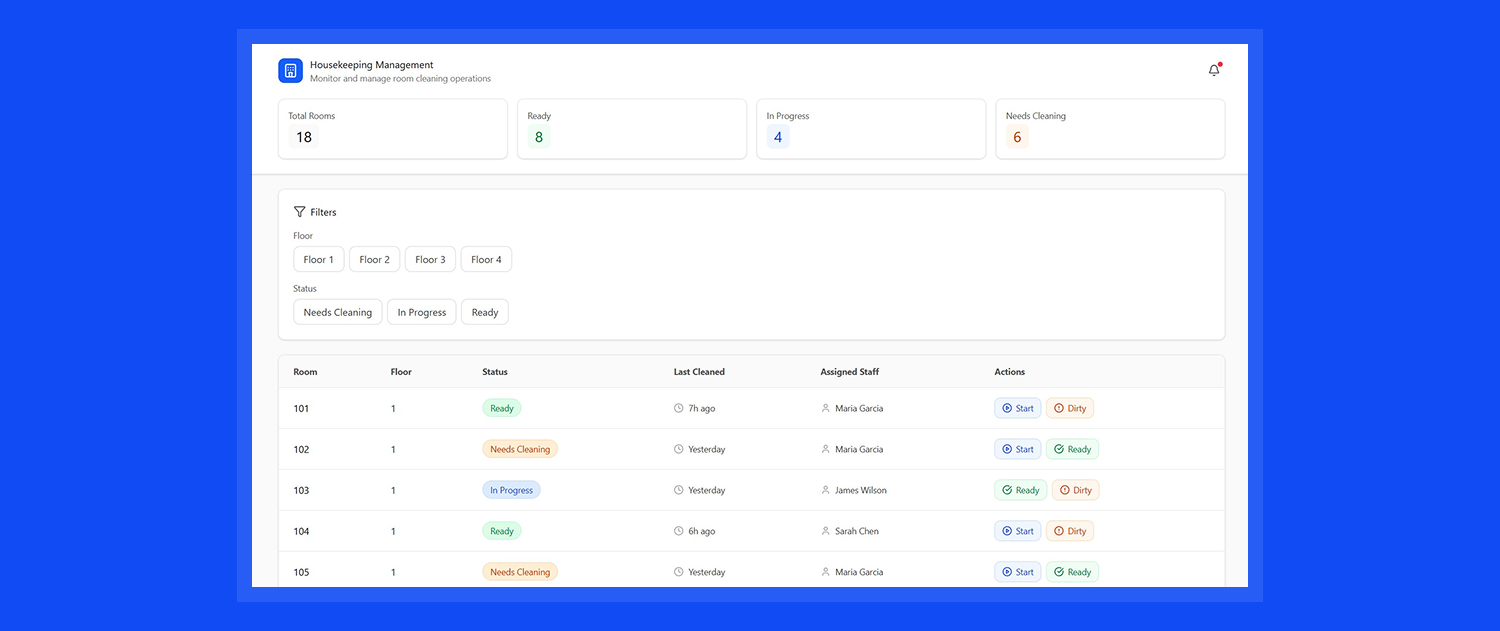
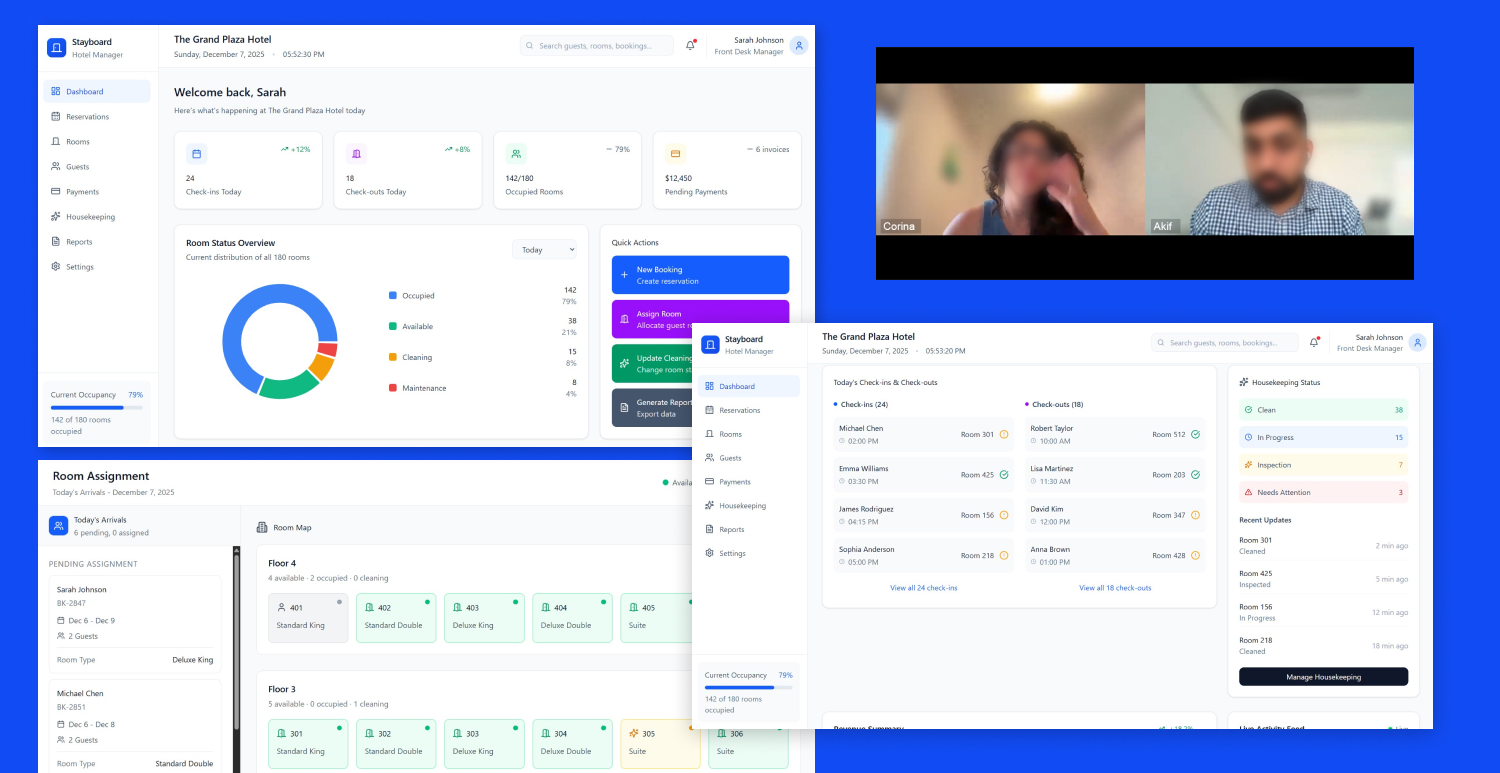
After collecting staff feedback, we created the first StayBoard UI to test our ideas. The design focused on a clear dashboard, fast booking edits, live room status, and easy payment tracking. We also added early concepts for housekeeping updates, error prevention, and automatic reports. This prototype helped us quickly test if the system really makes daily work easier and faster for hotel staff.
Usability Testing (Moderated & Task-Based)
Users followed a think-aloud protocol, sharing real-time feedback during tasks. Post-test interviews were conducted to validate findings and measure confidence.
This research framework ensured that design decisions were grounded in real user behavior and system performance.
Real hotel staff were invited to perform daily tasks such as:
Creating a new reservation
Editing existing bookings
Assigning rooms
Updating cleaning status
Checking payment status
Generating daily reports
Sessions were moderated and task-driven, allowing observation of:
Navigation clarity
Decision-making behavior
Error patterns
Time taken to complete daily work
*The final high-fidelity screens are in progress and will be published shortly.*
One of the most exciting parts of designing StayBoard was the freedom to experiment and improve real hotel workflows without being restricted by legacy systems.
As part of the research, design, and prototype testing cycle, we ran several small experiments focused on reducing staff effort and improving daily efficiency. During user interviews, we noticed that many front desk teams still relied on verbal updates, handwritten notes, or WhatsApp messages to track room readiness and cleaning status. This often caused confusion, delays, and repeat checking.
Seeing an opportunity to simplify this, we introduced a live room-status board inside StayBoard that allowed housekeeping to update room readiness in real time, instantly visible to the front desk. This small change removed constant phone calls, reduced coordination stress, and helped staff handle peak-hour operations with greater confidence.